

Last updated: May 2026. Reviewed by Lisa Norton, Level 4 qualified biophilic designer and APL Designer of the Year 2023.
“A well-designed therapy garden shortens post-operative recovery, lowers agitation in dementia care, and supports staff wellbeing in healthcare settings. The evidence has been clear for thirty years. The challenge is no longer whether to invest. It is how to design well, and who to trust with the brief.”
What a therapy garden actually is
A therapy garden is an outdoor space designed to support recovery, dementia care, palliative care, mental-health treatment and staff wellbeing in healthcare and care settings.
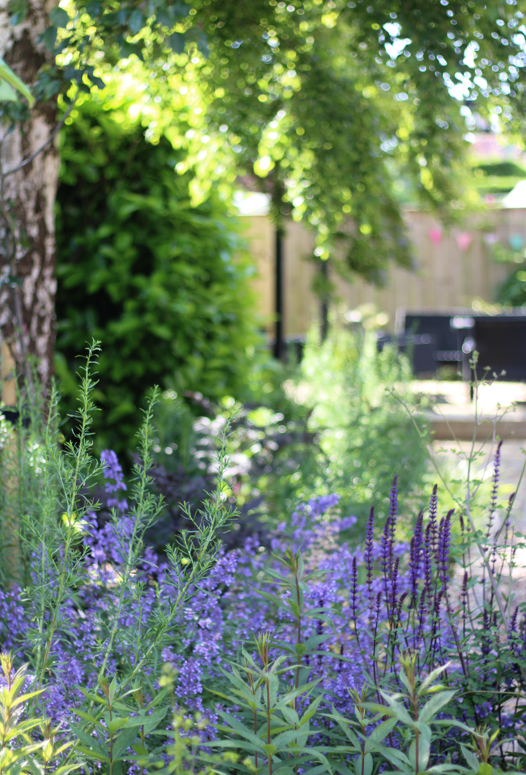
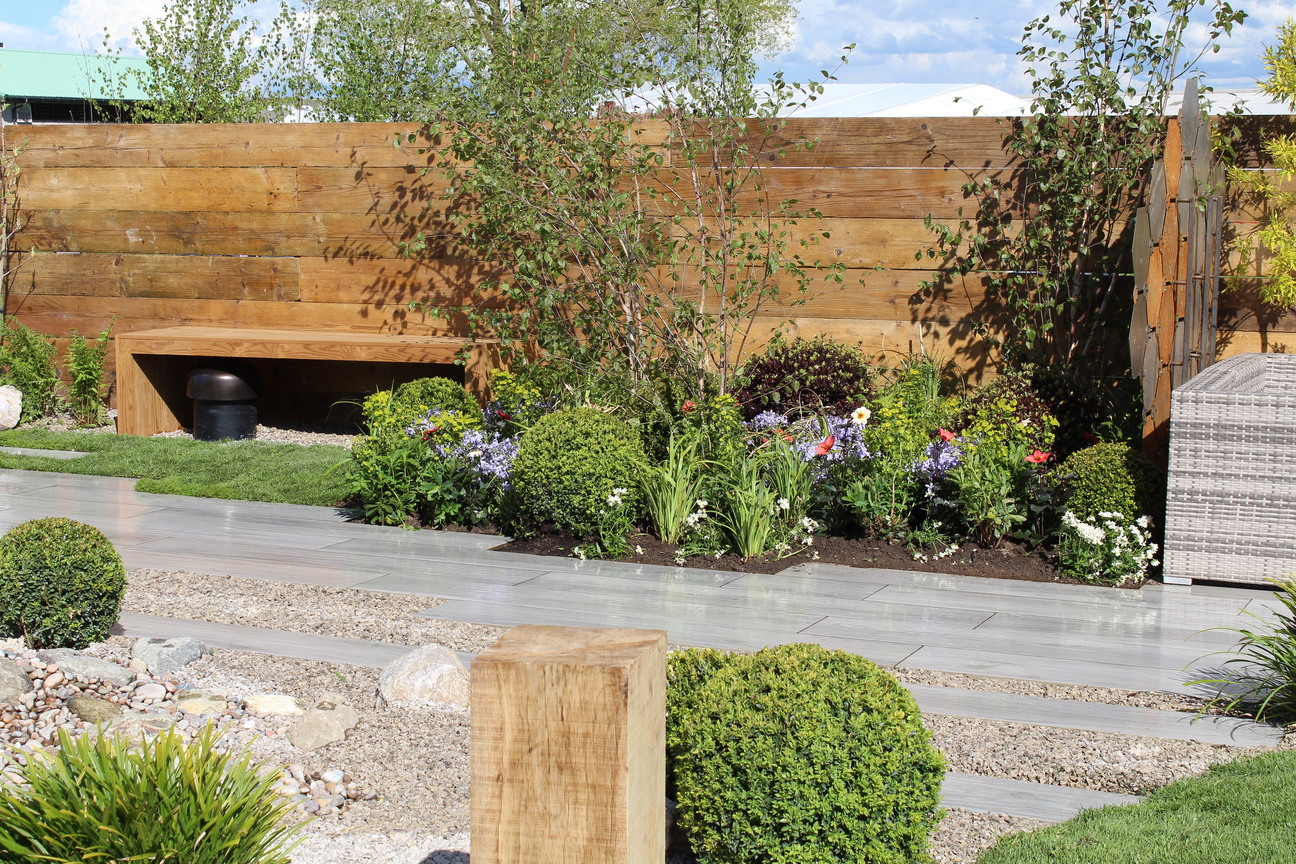
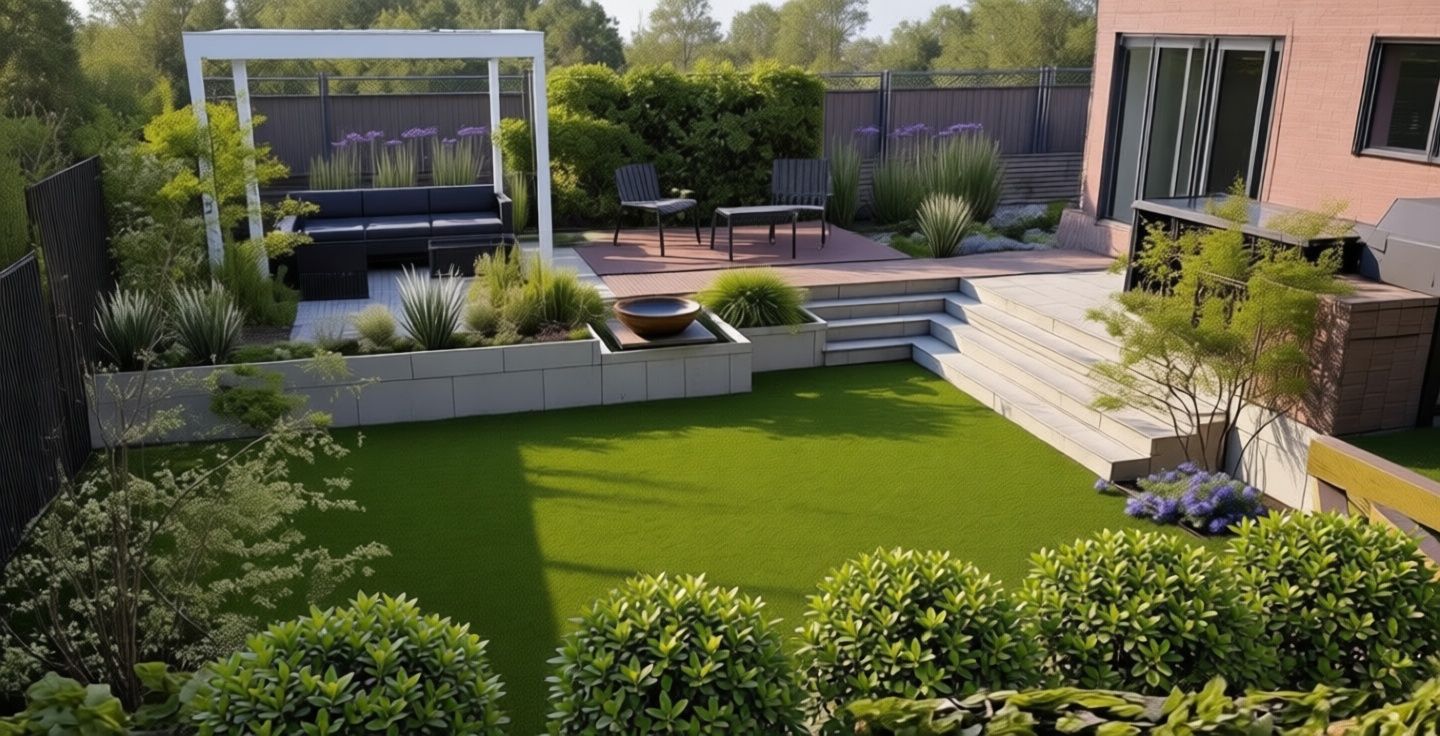
It is not the same as a public garden with a few benches. The design has to hold up to specific clinical needs: accessible paths, dementia-friendly wayfinding, raised beds for residents who cannot bend, planting that engages the senses safely, and refuge spaces for staff to decompress.
Harrogate Garden Design works with care home groups, hospices, dementia units, NHS estates teams, private clinics and SEN schools across Yorkshire and the North. Every brief is different. The evidence base is the same.
The evidence base
Three decades of research now support what experienced clinical teams have long known.
Hospital patients in rooms with a view of trees recover faster and need around 22% less pain medication (Ulrich, Science, 1984).
Dementia residents with safe, accessible outdoor space show measurably reduced agitation, fewer falls and improved sleep (Housing LIN, Stirling University design principles).
Hospice patients and families in settings with garden access report improved emotional wellbeing and a greater sense of dignity in late-life care.
Healthcare staff with access to a green break space show lower burnout markers and stay in role longer.
Children in biophilic learning environments show learning rates improved by 20 to 25%, with reduced ADHD effects and better attendance.
The numbers are repeated, peer-reviewed, and they are why this work matters.
Who we work with
Care home groups. Whether you run a single home or a portfolio, we design once and roll the philosophy across sites with location-specific adjustments. CQC ratings, family tours and staff retention all improve with a properly designed outdoor space.
Hospices. Hospice gardens hold the full weight of palliative care: patients, families and bereaved relatives returning to a place they associate with their person. We work closely with hospice teams, trustees and charitable funders.
Dementia units and memory care. Dementia design is a specialism inside a specialism. We design to the principles set out by the University of Stirling Dementia Services Development Centre (DSDC): continuous loop paths, no dead ends, no surfaces that read as water or holes, consistent wayfinding cues, and planting chosen for memory and sensory engagement.
NHS estates and trusts. We understand capital project timelines, infection control around planting, procurement frameworks, and the value of evidence-led business cases. The RHS and NHS Forest wellbeing garden initiatives have shown what is possible.
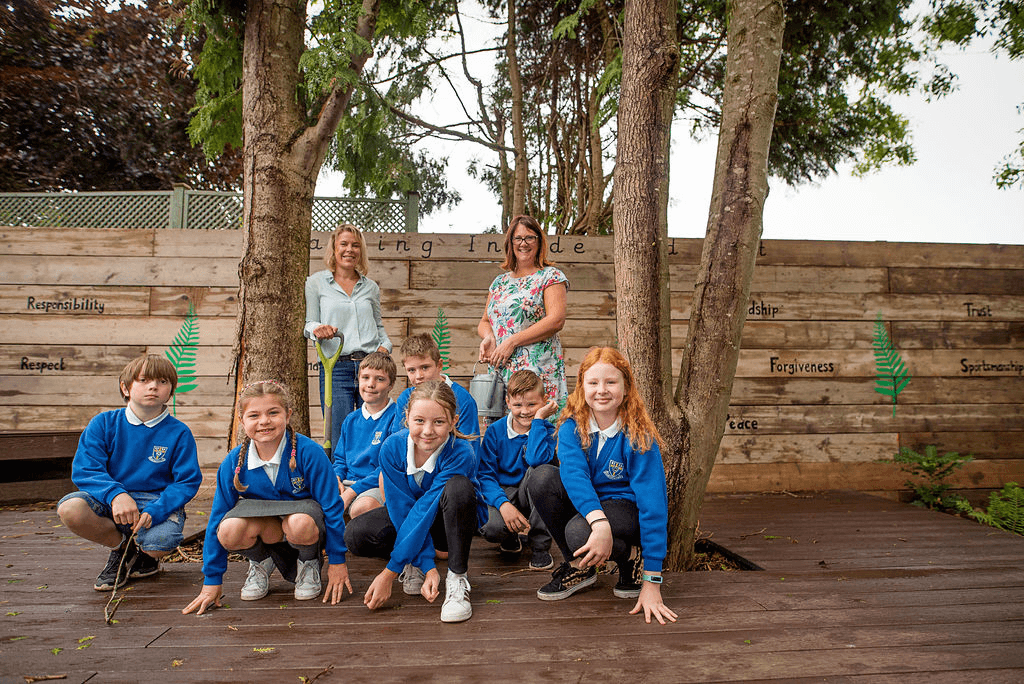
SEN schools and pupil referral units. Our work at the West Riding SEN provision in Barnsley is an example of biophilic principles applied to a complete classroom rebuild. The headteacher at Richard Taylor School in Harrogate describes our wildlife garden as a sanctuary for children and staff.
Private clinics and private healthcare. Therapy garden as both clinical asset and premium positioning.
Design elements that make a therapy garden work
Every brief is bespoke. Most therapy gardens include:
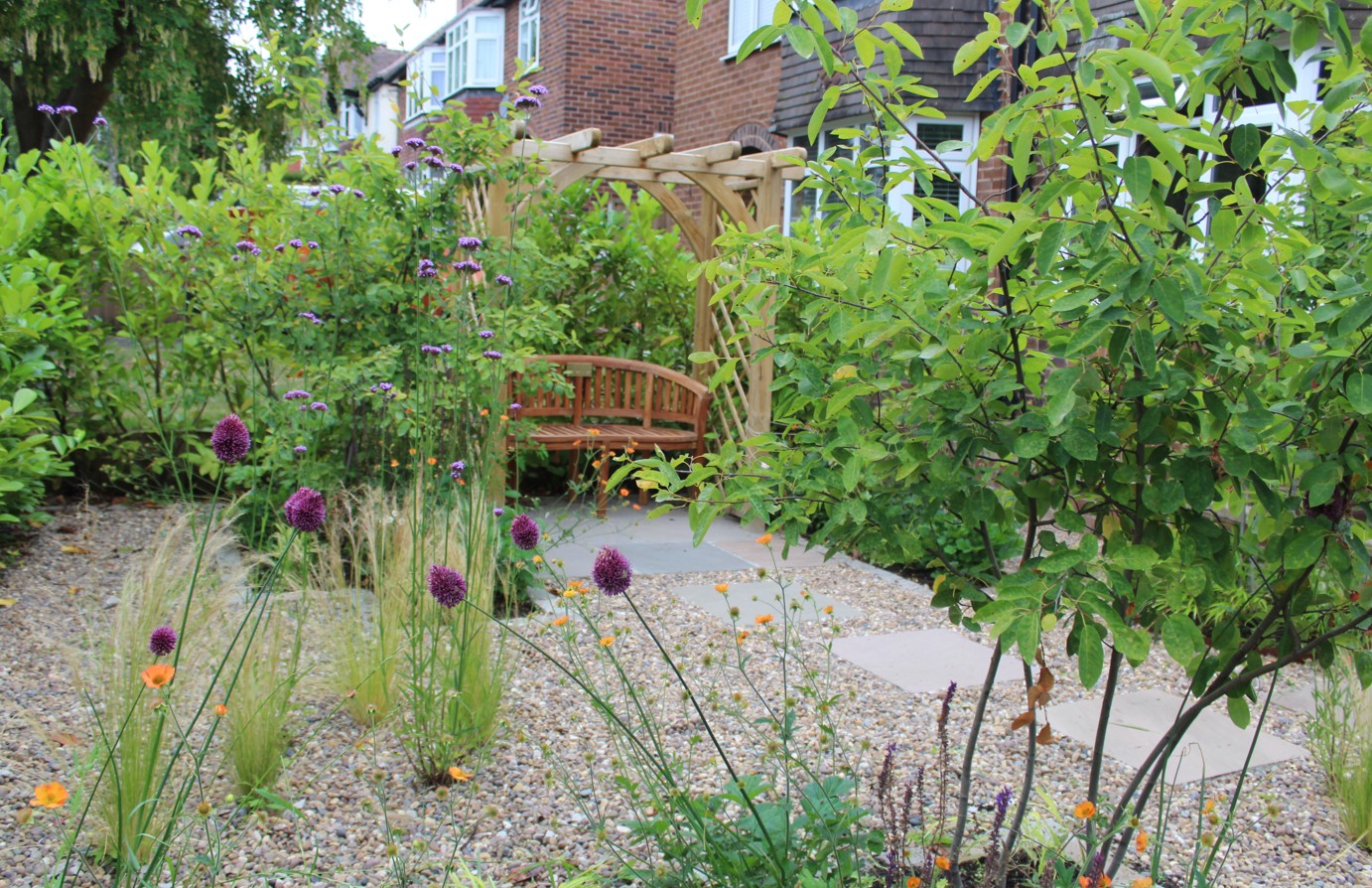
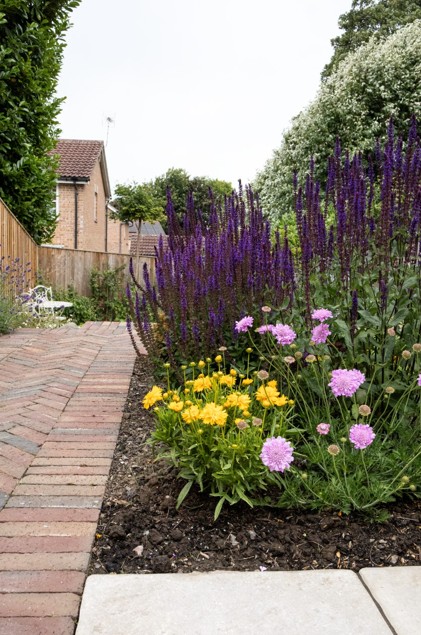
Accessible paths and surfaces. Wheelchair-friendly gradients, slip-resistant materials, tactile cues for low vision, no thresholds, no steps where avoidable.
Sensory planting. Hand-height contact, scent at the right height, texture, seasonal change, edible herbs and fruit where allowed.
Raised beds. So residents can plant, water and harvest without bending. Therapeutic horticulture is an active programme, not a passive view.
Dementia-specific cues. Consistent wayfinding, no dead ends, one continuous loop, no surfaces that look like water or holes, planting that triggers safe memory.
Safe boundaries. Open feel, secure reality.
Refuge spaces. At least one sheltered, semi-enclosed place to sit alone, away from the group.
Staff areas. Distinct from resident areas, so staff can decompress without performing.
Year-round structure. Half the year is grey. The design has to work in winter as well as June.
“Lisa created a sanctuary for children and staff. Children who find the classroom environment challenging at times, thrive in our wildlife garden. The space has become central to how we support pupils.”
,, Emma Crisell, Headteacher, Richard Taylor School, Harrogate
Our work with SEN provision: West Riding, Barnsley
The West Riding Communication and Interaction Specialist Provision in Barnsley serves students aged 11 to 16 with communication and interaction difficulties. We led the complete transformation of a disused building into a modern, biophilic SEN provision: nature-rich classrooms, sensory outdoor space, planting designed for safe engagement and calming routine, and a continuous flow between indoor and outdoor learning.
The brief was clinical. The outcome was a building that pupils, teachers, parents and the wider community use with pride.
For schools, SEN and educational biophilic projects, see our School and Community Gardens service, plus our sister studio at biophilicdesigner.co.uk which specialises in this work.
Funding a therapy garden project
We are used to working alongside funding applications. Common routes for therapy garden projects include:
Capital budgets, in larger care groups and NHS trusts
Charitable trusts and foundations funding health and wellbeing work
Macmillan, Marie Curie and named hospice grants
NHS Charities Together and local hospital charity arms
Integrated Care Board (ICB) discretionary capital
Wolfson Foundation grants for healthcare and community projects
Section 106 planning gain, where therapy gardens are part of new health-related developments
Local authority public health budgets for community-facing care projects
Biodiversity net gain credits, where the design includes habitat creation
We can provide design specifications, costed phasing options and evidence summaries to support funding applications. We do not write the application itself. We make it easier to make a strong one.
How the process works for institutional clients
1. Stakeholder brief. We meet senior leadership, clinical or pastoral leads, estates teams, residents (where appropriate) and family representatives. We listen first.
2. Site survey and analysis. Sight lines, sun and shade, existing planting, drainage, access, safeguarding, security.
3. Concept and consultation. Concept design, planting palette and phased option set. We expect to iterate.
4. Full design and specifications. Construction-ready and procurement-ready.
5. Build phase. We can oversee the build to make sure the design survives contact with the contractor and the budget.
6. Handover and aftercare. A maintenance specification so the garden survives its first three years, which is when most institutional gardens fall apart.
For homeowners, see our wellbeing garden service
If you are a homeowner looking for a wellbeing brief in your own garden, see our wellbeing garden design page. Same principles, different scale.
Frequently asked questions
How long does the project take?
From brief to completed build, a typical institutional therapy garden takes nine to fifteen months, including stakeholder consultation, design, procurement and build. Phased projects can be longer. Fast-tracked projects with funding already secured can be quicker.
Who looks after the garden after handover?
This is the single most overlooked question in therapy garden commissioning. We provide a maintenance specification and can recommend horticultural therapy partners. Some groups train an existing groundsperson, others contract a specialist firm. We design a maintenance route that is realistic for your site.
Can we phase the build to spread the cost?
Yes, and we recommend it for larger projects. Phasing is best planned at the design stage. We design a phase 1 that delivers benefit on day one, with later phases adding features as funding allows.
Do you work outside Yorkshire?
Yes. We are based in Harrogate and work across the North of England as standard. We take on selective projects further afield where the brief is right.
Are your gardens used in horticultural therapy programmes?
Yes. Where the brief includes therapeutic horticulture, we design raised beds, working spaces, tool storage and routes that support active gardening as part of a structured programme. We can recommend horticultural therapy partners.
Can you support our funding application?
Yes. We provide design specifications, costed phasing options, evidence summaries and supporting visuals. We do not write the application itself.
Our work with schools, SEN provision and indoor biophilic design lives at our sister studio, biophilicdesigner.co.uk.
Why work with Harrogate Garden Design
Qualified. Lisa Norton holds a Diploma in Garden Design, RHS Level 2 Certificate, and Level 4 in Biophilic Design. Currently studying Environmental Psychology and Spiritual Rewilding.
Award-winning. Gold at Harrogate Flower Show in 2021 and 2026. Designer of the Year, APL Awards 2023. Features in Modern Gardens Magazine, Horticulture Magazine and the Journal of Biophilic Design.
Experienced in education and care. West Riding SEN provision in Barnsley. Richard Taylor School wildlife garden. School and community garden projects across Yorkshire.
Personal. Every project is led by Lisa. You get the same designer from first stakeholder meeting to final maintenance specification.
Brief us on your project
The first conversation is free and confidential, and is usually the most important one we have. We are happy to come to you, host you at our Harrogate studio, or meet by video.
Email lisa@harrogategardendesign.co.uk or call 07917 523485.
Most institutional projects start with a one-hour scoping meeting and a follow-up note on costed phasing options.