

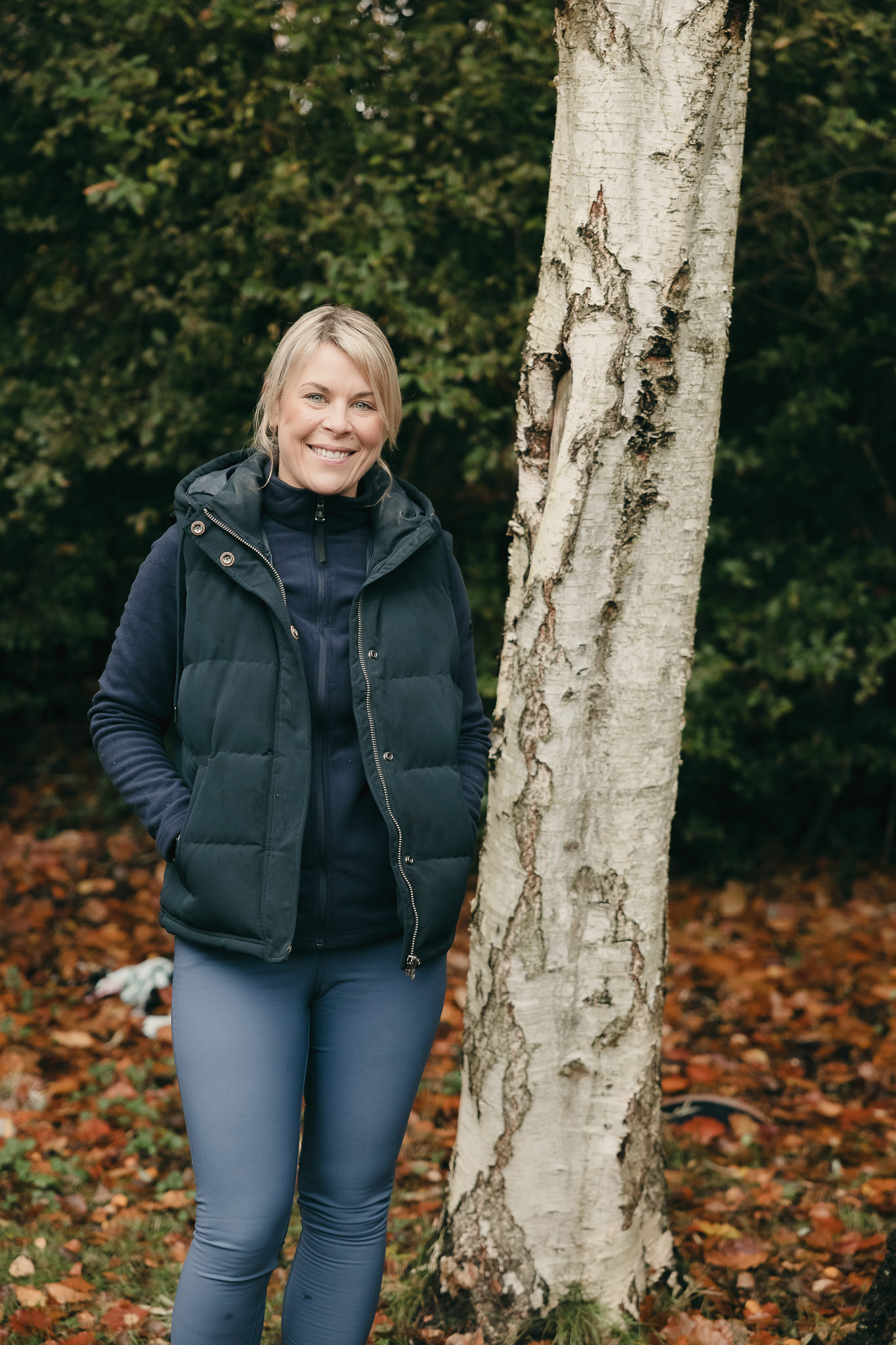
Last updated: May 2026 · Reviewed by Lisa Norton, Level 4 qualified biophilic designer and APL Designer of the Year 2023 (Level 4)
“A garden, designed properly, can change how you feel every day. We spend 90% of our lives indoors. The least we can do is build the other 10% around the science of how nature affects us.”
, Lisa Norton
What is a wellbeing garden?
A calming wellbeing garden is a garden designed deliberately to lower stress, lift mood, create a calming everyday space, and bring you closer to nature, using evidence-based principles from biophilic design.
Most gardens are designed to look nice. A wellbeing garden is designed to change how you feel. Every decision the designer makes follows from that.
A wellbeing garden borrows freely from wildlife gardens, Japanese gardens, sensory gardens and low-maintenance gardens. It is its own thing. Every choice has been made with two questions in mind: how will this make the people who use it feel, and what does the research actually say about that?

The evidence base
Three decades of research now back up what gardeners have always quietly known.
Hospital patients in rooms with a view of trees recover faster and need around 22% less pain medication (Ulrich, Science, 1984).
Office workers with views of greenery are around 8% more productive and report 13% higher wellbeing (Human Spaces Global Report).
People living near accessible green space have lower rates of anxiety and depression.
Time in a biophilic garden reduces measurable stress markers by around 35%.
Children in biophilic learning environments show learning rates improved by 20 to 25%, with reduced ADHD effects and better attendance (Heschong Mahone Group studies).
These are repeated, peer-reviewed findings. They are also why I built my practice around this work.
The seven principles of a wellbeing garden
A wellbeing garden is shaped by seven principles drawn from biophilic design. We use all of them, layered for your site, your brief and your budget.
Prospect and refuge: open views balanced with sheltered places to sit, both in the same garden.
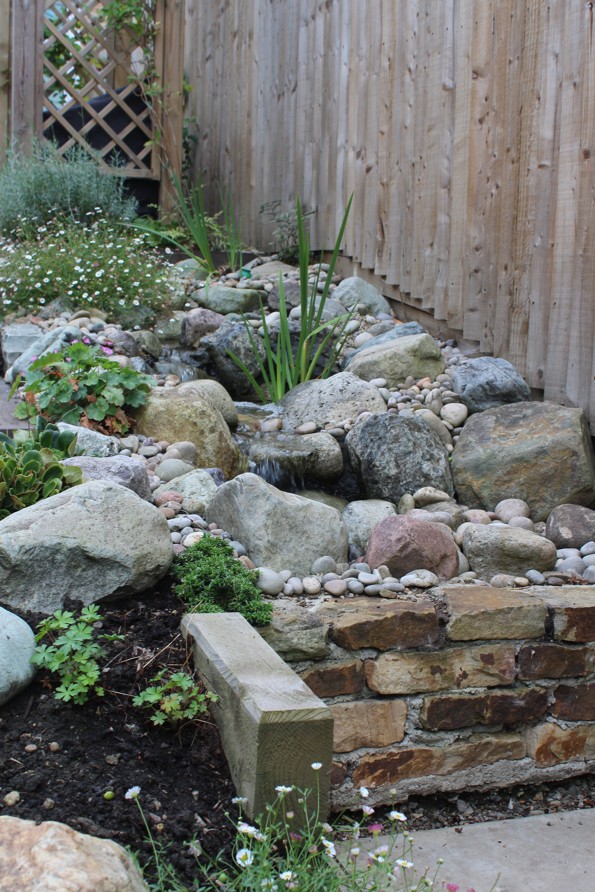
Water: sound, movement and reflection, even in a tiny garden.
Layered planting: depth, texture and seasonal change for the eye and the senses.
Scent at the right height: lavender at hand height, jasmine by the doorway, herbs by the patio.
Movement: grasses, slim trees, tall perennials that move in the wind.
Sensory variation: shifting light, textures underfoot, changes in temperature, scent.
Refuge from the everyday: a clear, visible separation from the working spaces of the garden (the bins, the shed, the parking).
How a wellbeing garden differs from a beautiful garden
A beautiful garden gets you compliments. A wellbeing garden changes how you use the garden, and how often.
Clients with wellbeing gardens tend to be in them most days, even in winter. Beautiful gardens are sometimes looked at through a window. Wellbeing gardens are walked through, sat in, breathed in.
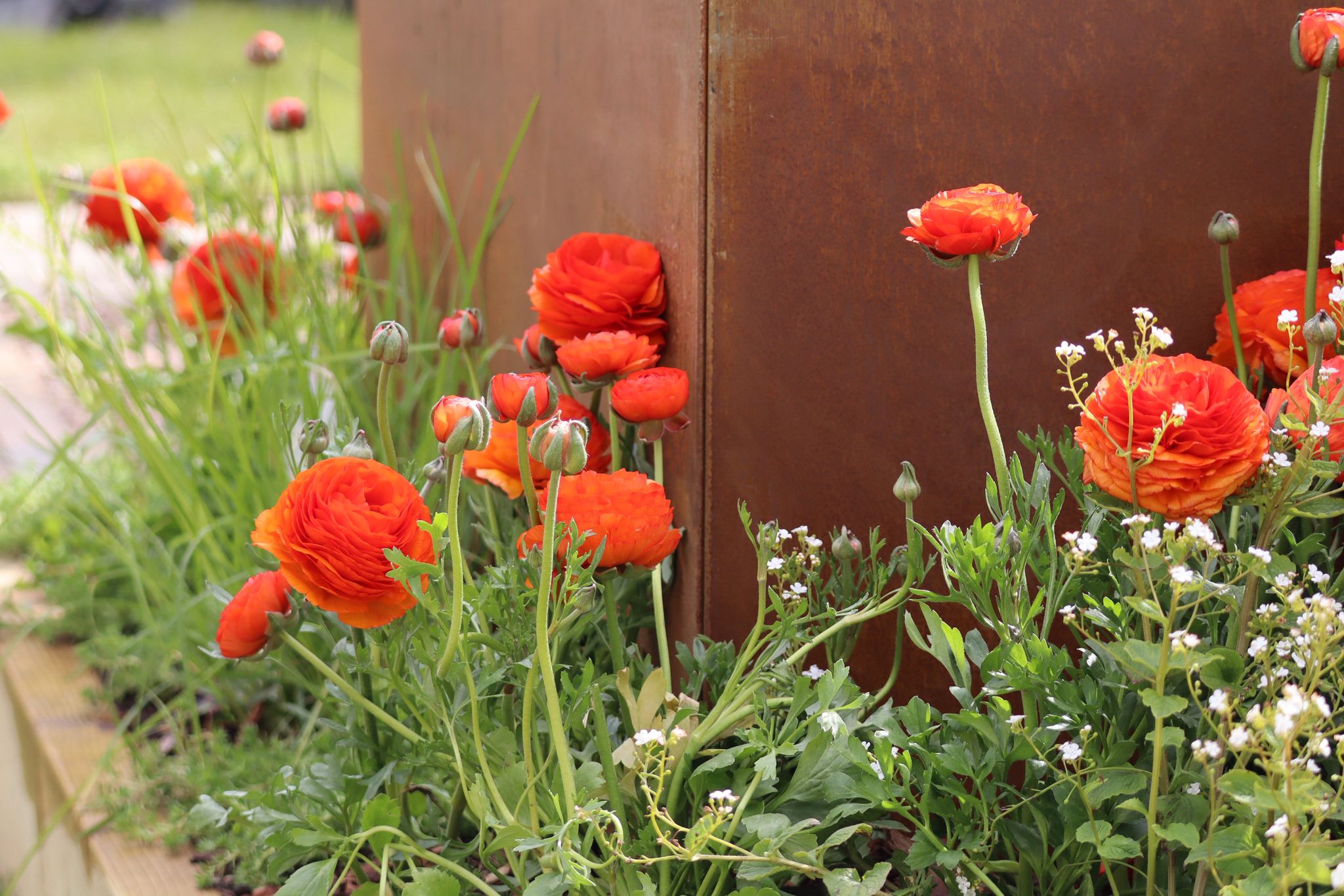
The design choices look different too. There will be at least two distinct places to sit, in different parts of the garden, used at different times of day. There will be planting you can walk among, not just look at from the patio. There will be at least one feature that engages a sense other than sight: water, scent, wind, or a path with a change of texture underfoot.
Plants we use in Yorkshire wellbeing gardens
Every brief calls for a different palette. These are the plants we reach for again and again, grouped by sense. Lisa adjusts the palette for your soil, aspect and Yorkshire microclimate.
Scent at hand height
· Sarcococca confusa: winter-flowering sweet box, scent in February when nothing else is going
· Daphne odora ‘Aureomarginata’: generous early-spring scent, perfect for shaded entrances
· Rosa ‘Gertrude Jekyll’: old English rose with one of the strongest scents in the genus
Movement and sound
· Stipa gigantea: golden oat grass, catches every breeze, holds structure through winter
· Hakonechloa macra: Japanese forest grass, rustles in the slightest wind
· Calamagrostis × acutiflora ‘Karl Foerster’: vertical, theatrical, an evergreen sound through winter
· Miscanthus sinensis ‘Morning Light’: taller, slimmer, late summer plumes
Touch and texture
· Stachys byzantina: lamb’s ears, soft enough that children stop on the way through
· Stipa tenuissima: pony tail grass, hand height, you’ll find people running their fingers through it
· Dryopteris erythrosora: Japanese shield fern, copper-tinted spring growth in shade
Sight, movement and year-round calm
· Verbena bonariensis: see-through purple, allows views and movement
· Echinacea purpurea ‘Magnus’: strong colour without shouting, a magnet for pollinators
· Cornus alba ‘Sibirica’: fiery red winter stems against the snow
Taste
A herb bed at hand height by the seating area: mint, thyme, rosemary, sage, chives, lemon verbena. Edible flowers (calendula, nasturtium) are tucked among the structural planting so the whole garden smells of summer when you brush past.
These are starting points. Your final palette depends on soil pH, aspect, microclimate, the way you want the garden to feel, and the time you have for maintenance.
Forest bathing in your own garden
Forest bathing (shinrin-yoku) is the Japanese practice of slow, sensory contact with trees and natural environments. The research shows measurable drops in cortisol after just 20 minutes in a tree-rich space.
Most of us cannot get to a forest most days. But a garden designed for forest bathing, layered planting, a small tree or two you can sit beneath, slow paths, no straight lines, scent at multiple heights, delivers a comparable effect in your back garden.
Most of our larger wellbeing gardens incorporate at least one forest-bathing pocket: a place where the planting closes in around you, the light shifts, and the everyday garden recedes for a few minutes.
“Lisa understood exactly what we needed. The garden has genuinely changed how we use the house. We’re outside most evenings even in winter, just listening to the water and the leaves.”
Patrick and Nicki, Starbeck, Harrogate
Three Yorkshire wellbeing gardens we've designed
A sloping garden in Pannal, Harrogate. A long, narrow, awkward garden that ran downhill. We turned the slope into three connected rooms, each with its own planting palette and seating, with a water feature positioned centrally to be enjoyed in all areas. The owners now eat outside from April to October and have told us the garden is their happy place.
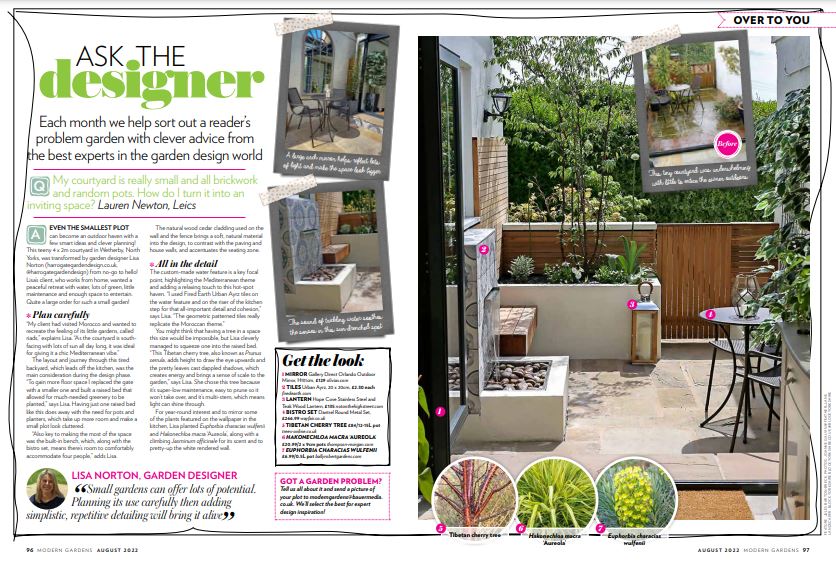
A Victorian terrace courtyard, central Harrogate. A small, dark, north-facing courtyard. We treated it as a refuge: a small seating area, a generous wall of green, a small water feature bringing in the sensory sounds, and a doorway frame of scented climbers. The whole space is six metres by four. The owner describes it as a tranquil oasis.
A new-build garden, Harrogate. A bland new-build plot of compacted clay and standard turf. We rebuilt the soil, planted a layered, biophilic palette for year-round structure, and put a low-maintenance seating area on the longest sight line. The children play in it. The parents drink coffee before work. The owners told us it now feels like a place they belong.
Who commissions a wellbeing garden
A wellbeing brief comes from a lot of different starting points. The most common are:
People with stressful jobs who want a garden that helps them switch off
People recovering from illness, surgery, burnout or grief
Families with neurodivergent children or members with sensory needs
People with anxiety, ADHD, depression or sleep difficulties, who want daily nature contact at home
Parents trying to coax screen-bound teenagers outside
Retirees building a forever garden
Anyone who knows they spend too much time indoors
We also design therapy gardens for care homes, hospices, dementia units and NHS sites. Same principles, different setting.
How the design process works
The wellbeing brief is woven into our standard Silver and Gold garden design packages. Before we start drawing, we have a deeper conversation about how you’d like to feel in the garden, what time of day you’ll use it most, what stress you’d like the garden to absorb, and whether anyone in the household has specific sensory needs.
1. Wellbeing consultation. 90 minutes on site or via video. We map your starting point and your goals.
2. Concept and mood board. The design concept, the planting feel, and a clear sense of the finished garden.
3. Design and drawings. 2D layout, then (Gold) 3D walkthrough visuals and contractor-ready design detail drawings.
4. Biophilic planting plan. Built around evidence: nature contact lowers cortisol, soft fascination restores attention, and the right scent in the right place can shift mood in seconds.
5. Build and planting. Optional project oversight to make sure the design survives contact with the contractor.
6. Year-one check-in. Six and twelve months after handover. We come back to make sure the garden is doing what it was meant to do.
Wellbeing garden design cost in Yorkshire (2026 pricing)
Wellbeing garden design uses our standard Silver and Gold packages, with a wellbeing brief woven in from the first conversation. No premium for the wellbeing focus, because the design fee is the same either way.
Wellbeing consultation: 90 minutes on site or via video, £150 (deducted from your design fee if you book within 30 days)
Silver design package: from £1,750 (2D layout, planting palette, contractor-ready design detail plans, wellbeing brief)
Gold design package: from £2,750 (adds 3D walkthrough visuals, lighting design, extensive detail plans)
Planting plan: from £25 per square metre of planted area
Project oversight: £50 per visit
Year-one check-in: included for Gold clients, £195 for Silver clients
Larger schemes, healthcare, commercial and education: quoted individually
A 20% deposit secures your slot.
For care homes, hospices, healthcare and education
The same principles applied at scale. We design therapy gardens for care homes, dementia units, hospices and NHS sites across Yorkshire and the North. Our work has improved learning rates in biophilic classrooms by 20 to 25%, reduced agitation in dementia care settings, and supported staff wellbeing in healthcare environments. The brief is different. The evidence base is the same.
Frequently asked questions
What's the difference between a wellbeing garden and a normal garden?
A wellbeing garden is designed around evidence: how the space will make you feel, and what the research says about that. A beautiful garden is designed to look nice. The two overlap, but a wellbeing brief drives different decisions on seating, planting, water, scent and route.
Does a wellbeing garden cost more than a normal garden design?
No. The design fee is the same, because the brief is what changes, not the work. If anything a wellbeing brief tends to lead to fewer hard-landscape features (which is where most garden budgets go) and more carefully chosen planting, so the build cost often comes down.
Does a wellbeing garden need more maintenance?
Not necessarily. Biophilic planting tends to favour layered, generous schemes that look after themselves once established. We can design a wellbeing garden to be very low maintenance if you tell us at the brief, or richer and more involved if you love gardening.
Will a wellbeing garden still look smart in winter?
Yes. Layered planting includes structural plants that hold their form through winter: evergreens, ornamental grasses, plants with sculptural seed heads. A good wellbeing garden looks intentional in every season, not just in June.
Can a small garden be a wellbeing garden?
Some of the best wellbeing gardens we've designed are small. A courtyard, a balcony, a five-metre terrace garden. Small spaces force every choice to count. One good seat, one water feature and a wall of greenery beats a half-finished large garden every time.
What is biophilic design and how does it differ from a wellbeing brief?
Biophilic design is a 14-principle framework about how human spaces should be built to reflect our innate need for nature. A wellbeing garden is the application of that framework to a domestic garden, with a specific focus on how the space affects mood, stress and restoration. Lisa is Level 4 qualified in biophilic design, the highest qualification widely available in the UK.
Can a wellbeing garden help with anxiety, ADHD, sleep or grief?
The evidence says it can help, alongside everything else you might be doing. Nature contact is now well-evidenced to lower cortisol, restore attention, support sleep and provide a calm setting for grief. We design with these outcomes in mind, while being clear that gardens are not a treatment. We don't make medical claims.
Can you work with my existing garden, or does it have to be a full redesign?
We can do either. Some clients want a full redesign for a wellbeing brief. Others ask us to take their existing garden and adjust it, new planting, a new seating area, a water feature, better routes, with the wellbeing brief in mind. We'll be honest at the first visit about what each route would deliver.
Do you design wellbeing gardens for care homes, hospices and healthcare?
Yes. See our therapy gardens page for full detail. Same principles, different brief, longer process.
Where in Yorkshire do you work?
Harrogate, Leeds, Wetherby, Ilkley, Knaresborough, York, Ripon, Bradford and Huddersfield as standard. Selective projects further afield where the brief is right.
For schools, SEN and commercial biophilic projects, please see our sister studio at biophilicdesigner.co.uk.
Why work with Harrogate Garden Design
Qualified. Level 4 qualified biophilic garden designer and APL Designer of the Year 2023. Diploma in Garden Design, RHS Level 2 Certificate, currently studying Environmental Psychology and Spiritual Rewilding.
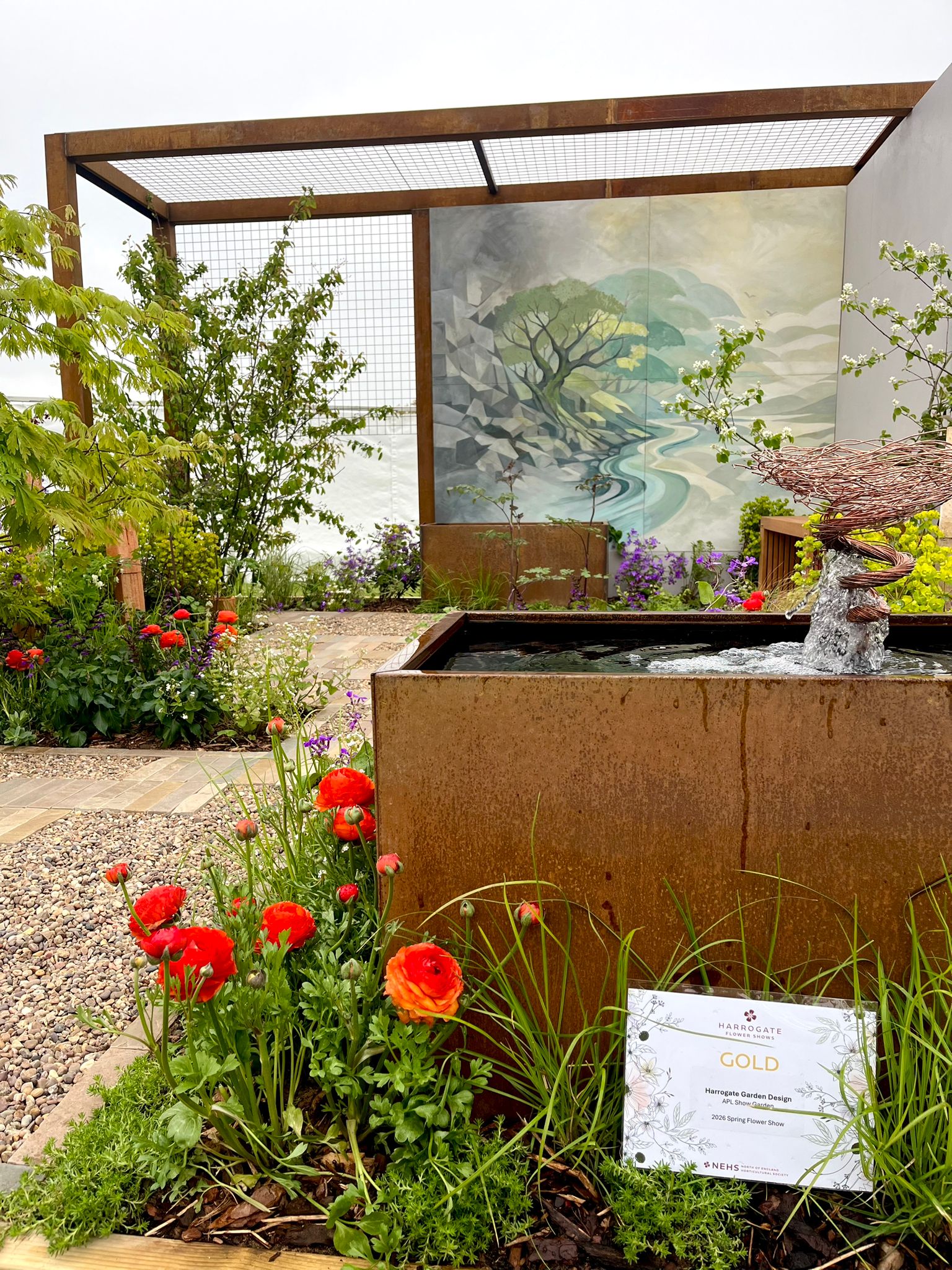
Award-winning. Gold at Harrogate Flower Show in 2021 and 2026. Designer of the Year at the 2023 APL Awards. Features in Modern Gardens Magazine, Horticulture Magazine and the Journal of Biophilic Design.
Local. Yorkshire-based, with first-hand knowledge of every microclimate from Wharfedale to the Pennines to the Leeds clay.
Personal. Every plan is by Lisa, not handed off to a junior. You get the same designer from first conversation to last planted bulb.
Book a wellbeing garden consultation
Drop me a line at lisa@harrogategardendesign.co.uk or call 07917 523485. The wellbeing consultation is 90 minutes on site or via video, £150, and it's deducted from your design fee if you book within 30 days.
Currently booking July 2026 site visits. The earlier you get in touch, the more flexibility you'll have on dates.